
Nice · Sophia Antipolis · Cannes · Antibes

Cybersecurity for small businesses in Nice and PACA

MZ Informatique audits, secures and monitors the IT systems of small businesses in Nice, Sophia Antipolis, Cannes and Antibes. Security audit, protection for workstations and backups, phishing awareness for your teams, alarms and cameras: one point of contact, reachable on 06 52 57 47 69, and a written, costed action plan before a single euro is spent.

48%of ransomware victims in France are micro, small and mid-sized businesses — ANSSI, 2025

Why are small businesses the first target of cyberattacks?

Because they are the least well defended, not because they are the wealthiest. In its Cyber threat overview 2025, the French national agency ANSSI reports that 48% of the ransomware victims recorded in France are micro, small and mid-sized businesses, against 37% a year earlier — the largest category of victims, ahead of local authorities and healthcare organisations. The agency handled 128 ransomware compromises over the year. A twenty-employee business in Nice or Sophia Antipolis is exactly the profile attackers look for: data that has real value — quotes, payroll, client files — a constrained IT budget, no security officer in house, and often an access route into the systems of a larger customer. Attackers are not targeting you by name: they scan, find a poorly protected remote access or a reused password, and walk in.

Source: ANSSI, Panorama de la cybermenace 2025 (CERT-FR), published 11 March 2026.

The good news fits in one sentence: those entry points are few and they close quickly. In almost every IT estate we audit on the French Riviera, the same three gaps come back — a remote access exposed to the internet without two-factor authentication, backups stored on the same network as the data, and former employees' accounts that were never disabled. None of the three is expensive to fix.
What does a cybersecurity audit involve for a small business?

A cybersecurity audit is a full assessment of your IT, carried out on site and then delivered in writing. At MZ Informatique it runs in three stages. Half a day on site: inventory of workstations, servers, mobiles and network equipment, verification of the backups and of a real restore, review of user accounts and remote access, check on updates and antivirus. Two to three days of analysis: mapping of sensitive data, password testing, search for public exposure and for leaks already known. A one-hour debrief: a written report ranking each risk by severity and by cost of correction, with an action plan prioritised over three, six and twelve months. Allow a week between the visit and the report. The first audit is free and carries no obligation.

  • The report is yours to keep, even if you do not go on to work with us.
  • No service interruption: tests are run outside your critical hours.
  • The report is readable by a company director, not only by an IT specialist.

The audit is the usual starting point: it decides what needs fixing first and what can wait until next year.

How much does cybersecurity cost for a small business?

The budget depends on the number of workstations and on the level of protection you are aiming for, but it is costed up front and does not move along the way. For a business in the Alpes-Maritimes with ten to thirty workstations, the costing always breaks down the same way: full security audit — the first audit remaining free; initial remediation, a one-off engagement that closes the gaps identified and puts the backups back in order; protection and monitoring on a monthly retainer, per workstation per month, including managed antivirus, off-site backup, updates and support; staff awareness training, per session. The final quote depends on three factors only: the number of workstations and servers, whether or not there is a file server to secure, and the level of monitoring you want — alerting alone, or guaranteed intervention.

We do not impose three-year commitments, and nothing appears on the invoice that was not agreed. Every quote separates what is essential from what is comfortable, so that you can spread the investment over several financial years if you need to.

How do you make teams phishing-aware?

Phishing remains the most used way in, because it does not target the machine but the person in a hurry. Effective awareness training comes down to three things. A real test campaign: we send fake phishing emails calibrated on your business — a bogus supplier invoice, a fake message from the director, a fake banking notification — and we measure who clicks, without ever naming anyone. A one-hour workshop, on site in Nice or by video call, built on the results of the campaign: spotting a forged sender address, checking a link before clicking, responding to an urgent payment request. A written procedure put up on the wall: who to report a suspicious email to, and what to do in the ten minutes after an unfortunate click. A second campaign three months later measures the real progress.

It is the least expensive item in the action plan, and often the one that pays back fastest.

What should you do while an attack is under way?

Act in this order, without improvising. One: isolate — unplug the network cable and switch off Wi-Fi on the affected machines, but do not shut them down: their memory holds traces that the analysis depends on. Two: protect the backups by physically disconnecting the drives and cutting off access to remote storage, before the encryption reaches them. Three: call a professional before attempting a restore: a restore started too early reinfects the network. Four: do not pay the ransom — payment guarantees neither the key nor that your data will stay unpublished. Five: report it — a complaint to the police or the gendarmerie, and notification to the CNIL within 72 hours if personal data is involved.

Attack in progress? Call us straight away — we cover Nice and the Alpes-Maritimes.

Emergency: 06 52 57 47 69

Ransomware protection, tested backups and a written recovery plan are what turn an incident into an interruption rather than a closure.

48%

of the ransomware victims recorded in France are micro, small and mid-sized businesses, against 37% the previous year.

ANSSI — Cyber threat overview 2025
128

ransomware compromises handled by the French national agency over the single year 2025.

ANSSI — Cyber threat overview 2025
72 hrs

the legal deadline for notifying the CNIL after a personal data breach.

GDPR, article 33

On the ground

We come and look at your installation before we talk about it

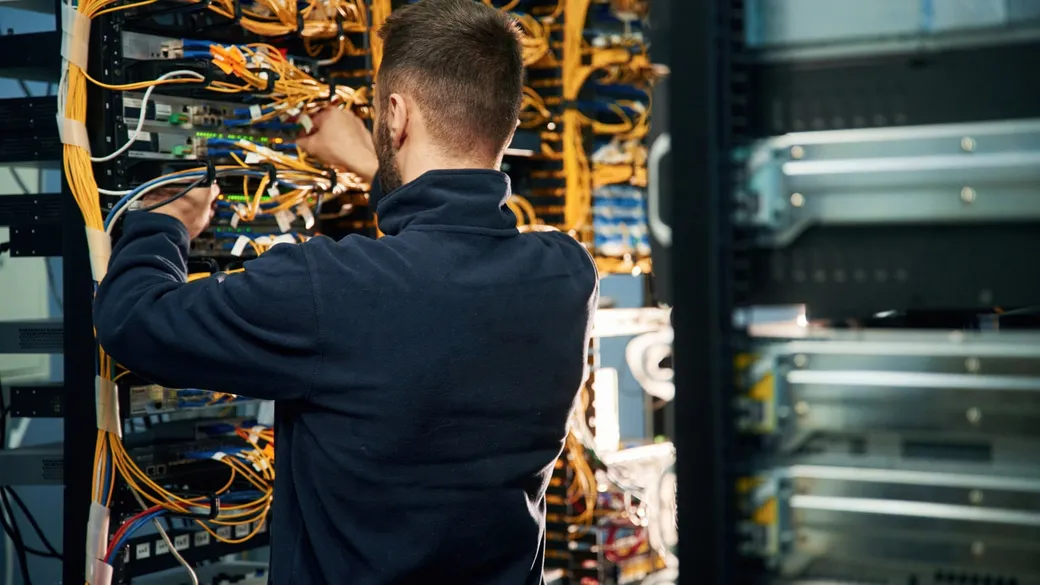
An audit is not done remotely from a questionnaire. We open the cabinet, test a backup restore and watch how your teams actually work.

Results & guarantees

What it looks like in practice

No cybersecurity case study is published to date: a reference only goes live with the client's written consent.

Degrees, accreditation and references

  • CASPAR master's degree — cryptography, security and privacy, 2021
  • SUPINFO engineering degree (master's level), 2015
  • CIR and CII accreditation — French Ministry of Research

Frequently asked questions

Cybersecurity for small businesses: what we get asked

How long does a security audit take for a twenty-workstation business?

Half a day on site, then two to three days of analysis and a one-hour debrief. Allow a week between our visit and the written report. Your teams keep working throughout: any test that might get in the way is run outside opening hours.

Are an antivirus and a backup enough to protect a small business?

No, but they are the foundation. An antivirus does not stop a stolen password, and a backup permanently plugged into the same network gets encrypted along with everything else. You also need two-factor authentication on remote access and on email, an offline or off-site backup that is restored regularly as a test, and the removal of unused accounts.

Do you cover the whole Alpes-Maritimes department?

Yes. We travel to Nice, Sophia Antipolis, Cannes, Antibes, Grasse and Menton. Emergency call-outs in Nice and its immediate surroundings are handled the same day where our schedule allows; elsewhere in the department, within 24 to 48 hours.

What happens if we are already under attack when we call?

We take the call as a priority and talk you through the isolation steps on the phone straight away, before we even set off. We then contain the incident, analyse how the intrusion started, restore from a clean backup and bring services back progressively, then support you through the police report and the CNIL notification if personal data is involved.

How secure is your IT today?

A free audit with no obligation, on site in Nice, Sophia Antipolis, Cannes or Antibes. You leave with a written assessment; the decision that follows is yours.